広島・海田町のいけばな教室 | いけばな三村教室

- Home
- › Kan-en-ryu


Kan-en-ryu was started during the Second World War in 1943, at Dalian in the former Manshu, the northeast of China. It was created to seek out innovative use of IKEBANA to fit the new lifestyle of the era. The second founder, Kanyou Ogawa, had made a studious effort to enhance the art since his early childhood. In those days the mainstream was to follow the classical upright arrangement style of “IKEBANA only in TOKONOMA”, and so KANEN’s free concept, which changed the arrangement forms suitable for setting elsewhere in the home, displayed striking originality. Since then this contemporary form, known as “GENDAIKA”, has come to be widely appreciated.
Kan-en-ryu’s motors of “Always moving forward” and “Flowers fit for the time we live” are both basic philosophies emphasized by the founder of it. From the earliest times the Japanese have tried to keep good relationships with the beautiful natural surroundings through its variety of seasonal changes. The essence of IKEBANA comes from the Japanese respect and love for nature and from the desire to bring that appreciation into the home.
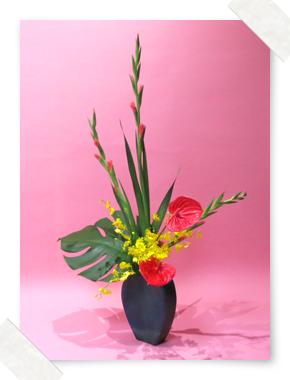
Therefore we believe it is important that IKEBANA should evolve in harmony with the surroundings in the changing times that we live in. We hope to enjoy the surroundings of our daily lives by cherishing each precious moment through our love of nature, which is the founding philosophy of IKEBANA.
After World WarⅡ, the Kan-en-ryu’s head office moved to Fukuyama City in Hiroshima. The current headmaster of it is Kanen Ogawa, the son of it’s founder. He has followed in the founder’s principles and continues to explore the art of KANEN.